



 (
(

How do I start an Awareness Badge and cause program?
Learn how to choose a cause, get department approval, and design your awareness badge before key ordering deadlines.
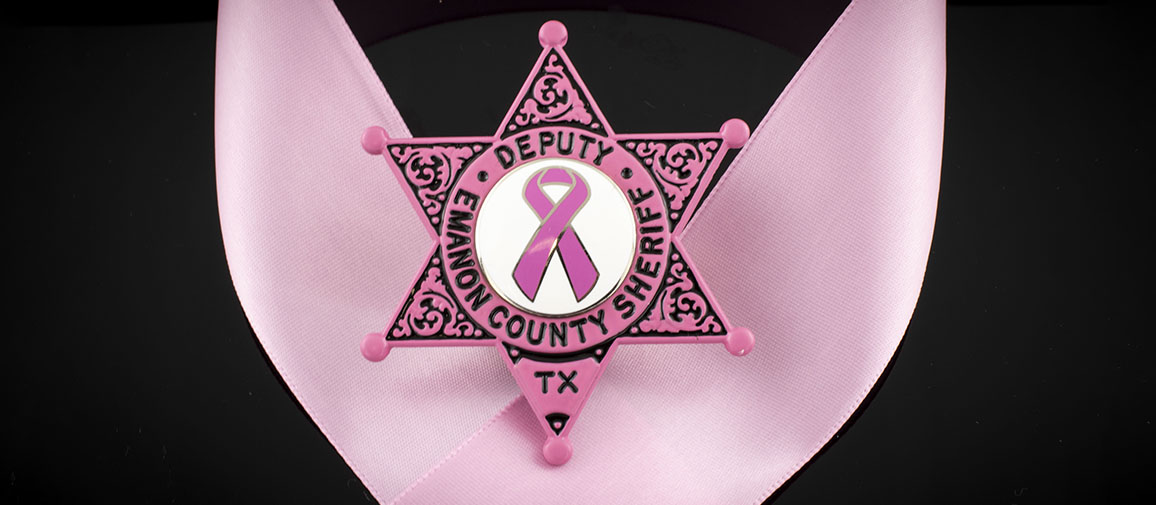
Starting an awareness badge program takes five steps: choose a cause, optionally choose a charity to fund, get authorization from your department chief, connect with a badge manufacturer, and design and order your badge. Starting early gives your department the best shot at rallying support, landing on a design everyone's proud of, and debuting the campaign with full visibility right when the awareness month arrives.
Key takeaways:
- The program starts with identifying a cause — often something personal to an officer, a department member, or the community.
- Choosing a charity is optional but common. Smith & Warren's flagship program donates 10% of pink awareness badge proceeds to the National Breast Cancer Foundation.
- The department chief authorizes the badge, the cause, and the wear dates — this isn't an individual officer's decision to finalize alone, even if the idea starts with one.
- Once approved, connect with a badge manufacturer like Smith & Warren — some designs are ready to build online today, while others benefit from working directly our sales team.
- Start early: custom badges take about 4–6 weeks to manufacture, so reaching out and settling on a design well ahead of your target awareness month gives your department the most room to launch it right.
- Awareness badge purchases are typically funded personally by officers, not by the department.
Step 1: Choose Your Cause
Start by identifying what your department wants to rally around. A cause can be a broad social or philanthropic effort (like funding a cure for a disease), or something tied directly to the job — for example, autism awareness stemming from how officers interact with autistic individuals and families in the field.
These campaigns often start small: one officer asking to wear a special badge to support a colleague or family member, or a department deciding to formalize training around a cause like autism awareness. Departments frequently pair the badge with a fundraising effort tied to the cause.
Step 2: Choose Your Charity (Optional)
Departments aren't required to attach a charity to the campaign, but many do. Options range from large national organizations to small local nonprofits — local partnerships can also strengthen ties to the community the department serves.
Smith & Warren's primary charitable partnership is built around its pink badge program: 10% of pink awareness badge proceeds are donated to the National Breast Cancer Foundation.
Step 3: Get Authorization From Your Department Chief
Wearing an awareness badge is a departmental decision, not an individual one. An idea can originate with any officer, but the department chief authorizes the cause, the badge, and the specific dates it can be worn — which typically align with the relevant awareness month.
If the campaign supports someone within the department, the badge doubles as a morale booster in addition to its public-facing purpose.
Step 4: Contact a USA-Made Badge Manufacturer
Once your program has the green light, the next step is bringing your vision to life — and that starts with reaching out to a badge manufacturer like Smith & Warren. Some awareness badges are ready to design right on our site: you can build your badge in VisualBadge, request a quote, and your order gets placed through your dealer (if your department doesn't already have one, we'll assign you one). For other awareness programs, our team is here to help you build a program that's meaningful and meets your goals. Review awareness badge design options or contact the Smith & Warren sales team to talk through what's possible.
Step 5: Finalize Your Awareness Program and Order Your Badge
This is where the program actually launches. Finalize your badge style and finish, work with your manufacturer to land on the details, and place your order. There are two common approaches:
- Full color-coated badge — an entirely powder-coated badge in the cause color (for example, an all-pink badge for breast cancer awareness) for maximum visibility.
- Accented badge — your department's existing badge style with cause-colored enamel lettering and/or a themed center seal, such as a pink ribbon.
Custom badges take about 4–6 weeks to manufacture, so the earlier you connect with your manufacturer and settle on a design, the more room your department has to launch the campaign exactly the way you envisioned it — right as the awareness month arrives.
How Is an Awareness Badge Program Funded?
Purchasing an awareness badge is optional for individual officers, and these programs are typically funded personally rather than by the department. Some departments layer in an additional charitable donation at the point of purchase. Wearing a visibly colored badge in the community also opens the door for officers to explain what it represents and which charity the department supports.
Explore Your Options
Domestic violence awareness, mental health awareness, childhood cancer — we've seen departments build truly inspiring programs around causes like these, and we've had the privilege of being part of them from the very beginning, offering guidance on planning, design, and options along the way. Some departments even go on to run multiple awareness programs at once, each with its own cause, color, and story of its own.
Frequently Asked Questions About How to Start an Awareness Program
How do I start an awareness badge program in my department? Identify a cause, decide whether to attach a charity, get authorization from your department chief for the cause and wear dates, design the badge, and order early enough to meet manufacturing deadlines.
Who approves an awareness badge program? The department chief. An officer or group can propose the cause, but the chief authorizes the badge, the cause, and the dates it can be worn.
Is a charity partnership required for an awareness badge program? No. Attaching a charity is optional, though many departments choose to fundraise for a national or local organization tied to the cause.
How far in advance do I need to order awareness badges? Custom badges take about 4–6 weeks to manufacture, so it's smart to start the process — choosing a cause, getting chief approval, and finalizing a design — several months ahead of the awareness month you're building toward.
Does the department pay for awareness badges? Typically, no — these programs are usually funded by individual officers purchasing their own badges, sometimes with an added charitable donation.
What's the best way to make sure my badges arrive in time for the campaign? Start early, and start with your department. Rallying support, getting chief approval, and choosing a design all take a bit of time on their own, and custom manufacturing adds about 4–6 weeks on top of that — so the earlier the whole process kicks off, the more room you'll have to launch the campaign exactly the way you envisioned it.
About the Author
Michael Camara
Vice President, Marketing & Brand Strategy, Smith & Warren
Michael Camara is Vice President of Marketing & Brand Strategy at Smith & Warren, the leading U.S. manufacturer of public-safety badges and insignia. His career at the company spans design, creative direction, and marketing, giving him a practical understanding of badge design and the options available to departments and authorized dealers.
In Smith & Warren’s Learning Center, Michael writes about badge design, heraldry, and the meaning behind badges and insignia, helping readers make informed decisions about the symbols that represent their departments and professional identities.